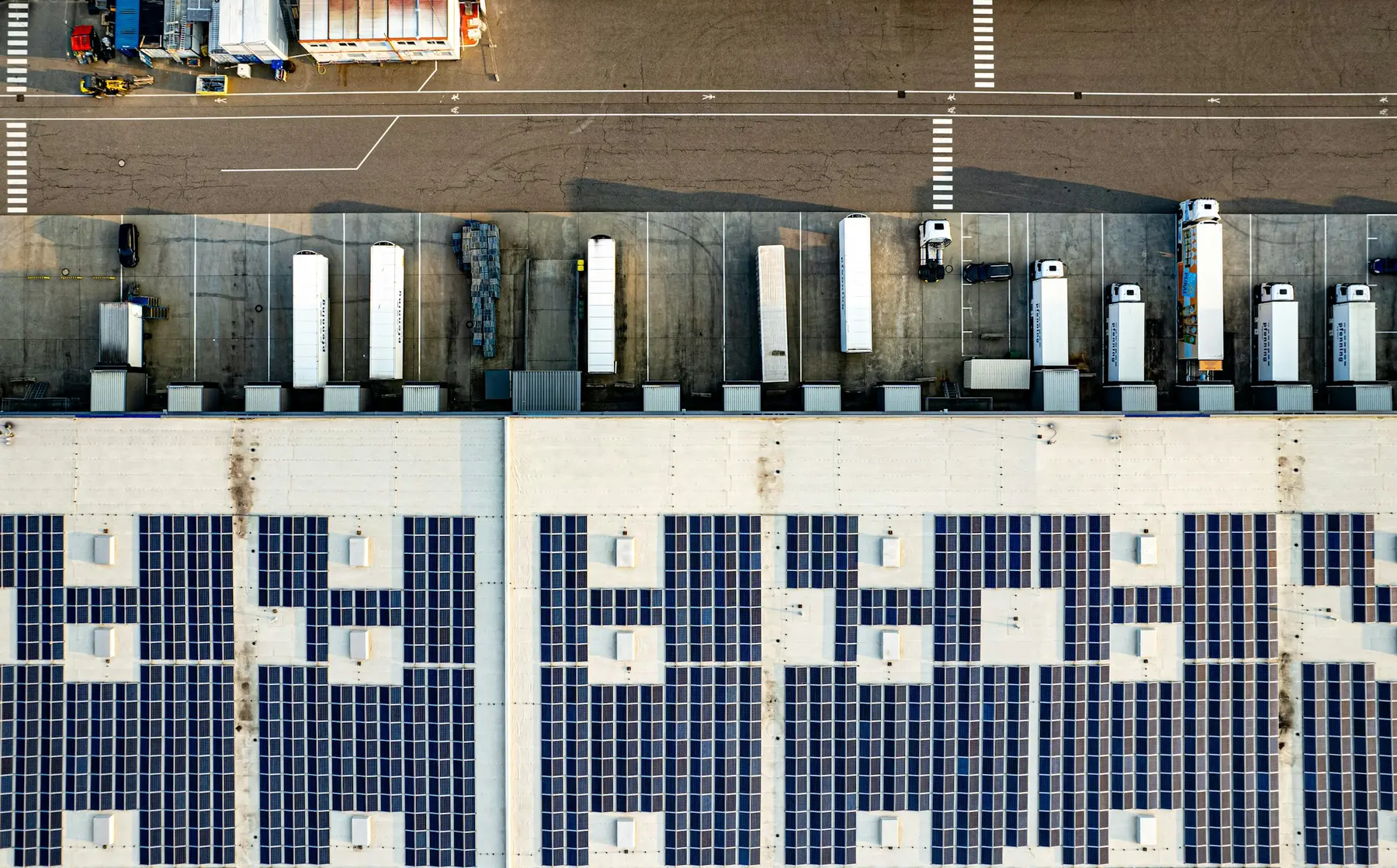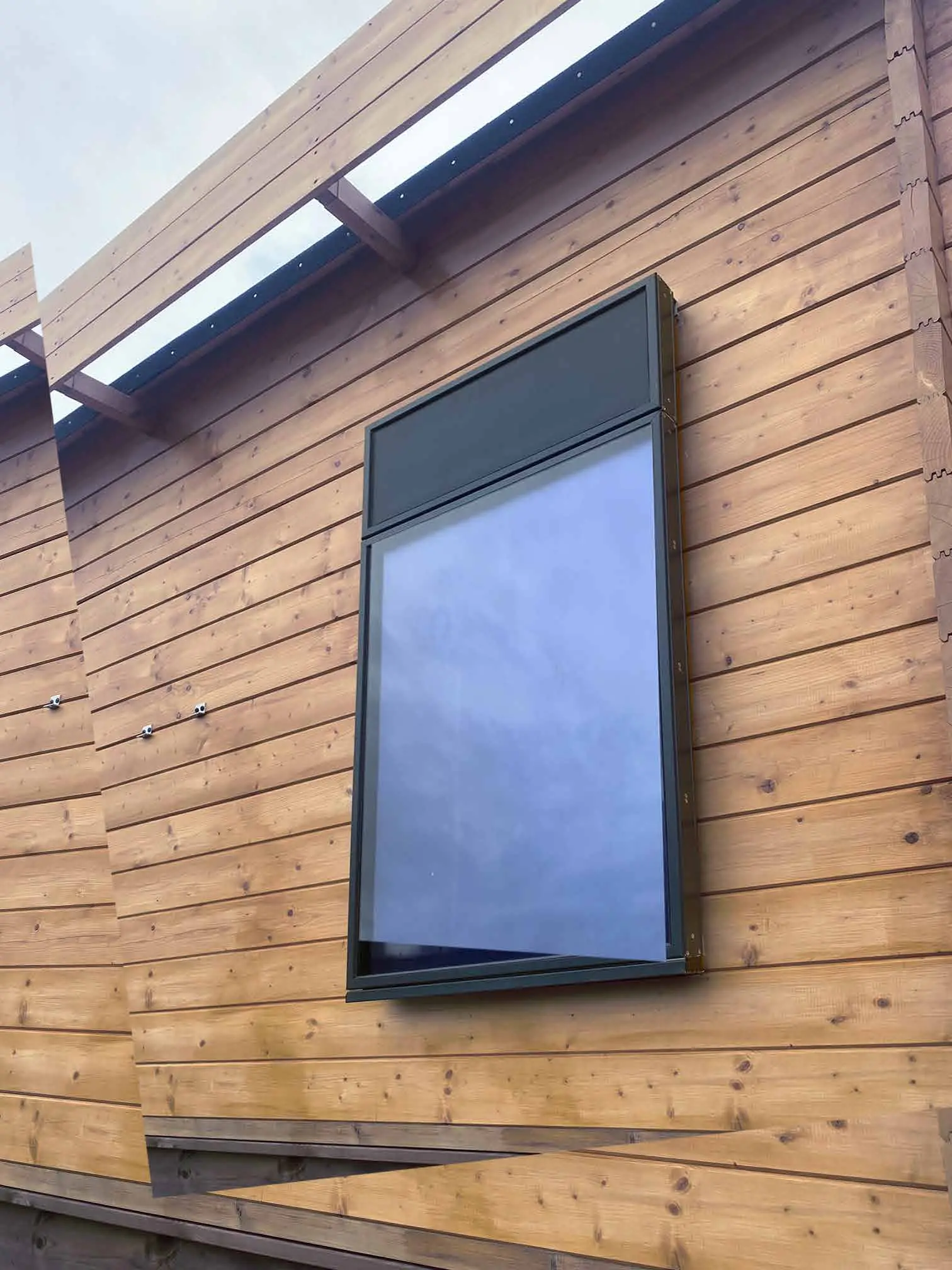
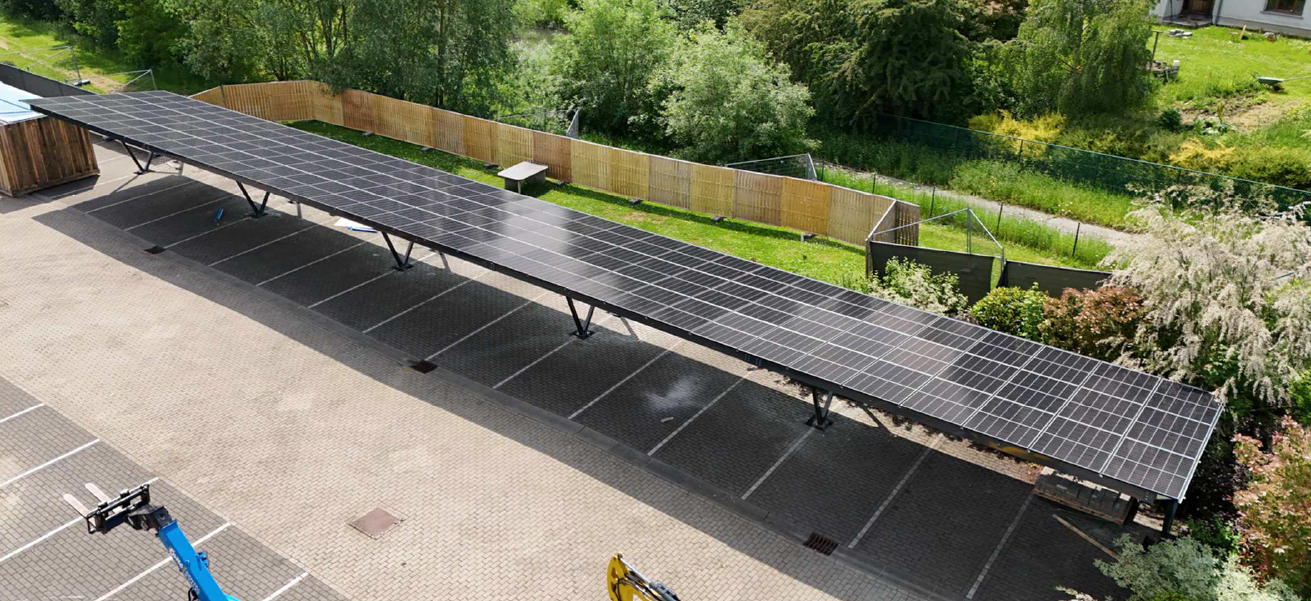
Your car park can generate solar electricity, shelter vehicles and make charging easier. To create an asset that serves your business, these functions should be assessed together, based on how the site is used and its electrical capacity.
Growing electric vehicle adoption changes demand
In its Global EV Outlook 2026, the International Energy Agency reports that global electric car sales exceeded 20 million in 2025. In Europe, they accounted for 28% of new car sales. These figures include battery electric vehicles and plug-in hybrids. [1]
For a business, the first questions are practical: who will charge, at what time and for how many kilometres? An employee who stays all day has different needs from a visiting customer or a company vehicle that must leave again quickly.
Size charging around the time available
Every parking space does not need high charging power. Compare the energy that needs to be replenished with the time vehicles remain parked, then check the power actually available at the grid connection.
Consider a purely illustrative example: ten cars each needing 15 kWh require a total of 150 kWh. Spread over six hours, this represents average power of 25 kW, excluding losses. This average is a starting point; arrival and departure times and vehicle charging capabilities can change the required sizing.
Smart charging allocates power between vehicles while taking the building’s other electricity demands into account. The IEA highlights the value of this flexibility in limiting peak demand. [1]
Compare solar generation with actual consumption
A solar carport’s output depends on location, orientation, shading and system losses. The European PVGIS tool estimates photovoltaic generation from site characteristics. An installation in France and one in Romania therefore require separate assessments. [2]
The study should then compare this generation with the building’s and vehicles’ needs, hour by hour where the data allows. Solar electricity can contribute to charging and other site uses; it does not guarantee entirely solar-powered charging at all times.
A battery can be considered where it addresses a measured need. Its value depends particularly on the consumption profile, surplus generation, grid connection constraints and the total cost of the solution.
Assess the whole project before selecting equipment
Project quality also depends on foundations, access routes, underground services, the grid connection, electrical protection and maintenance. The car park layout should keep circulation practical and accommodate operational constraints.
To compare solutions, ask for a clear scope: studies, structure, panels, charging points, installation, monitoring and maintenance services. Applicable procedures and requirements are checked for the specific site, in France or Romania.
Turn an idea into a project that can be financed
Lionberry - EVRA works with you to assess the right combination of carports, solar generation and charging. Full financing through an operating lease may be offered for the eligible scope, subject to assessment and approval of the application. Lease payments, the term and included services are specified in the offer.
Could your car park accommodate this project? Send us its location, a plan or a few photographs, your electricity consumption and anticipated charging needs. We will prepare a technical and financial study to identify a solution suited to your business.
Informational content prepared by Lionberry Energy. Project sizing, pricing, performance and contractual structure are confirmed only after site assessment and approval by the parties.